

Clinical research stands at a critical inflection point. Scientific innovation is moving faster than ever, AI is changing the way we work, and the global clinical research enterprise must work collectively to keep pace.
Today’s clinical trials depend on collaboration across borders, regulatory systems, organizations, and stakeholder communities. Greater coordination and harmonization can help mitigate unnecessary complexity while strengthening the ability to conduct ethical, high-quality research and bring new treatments to patients.
The path forward will require a regulatory environment grounded in expertise, predictability, and stability; meaningful incentives that support patients, sites, CROs, and sponsors; and a continued focus on making clinical trials more accessible to the people and communities they are intended to serve.
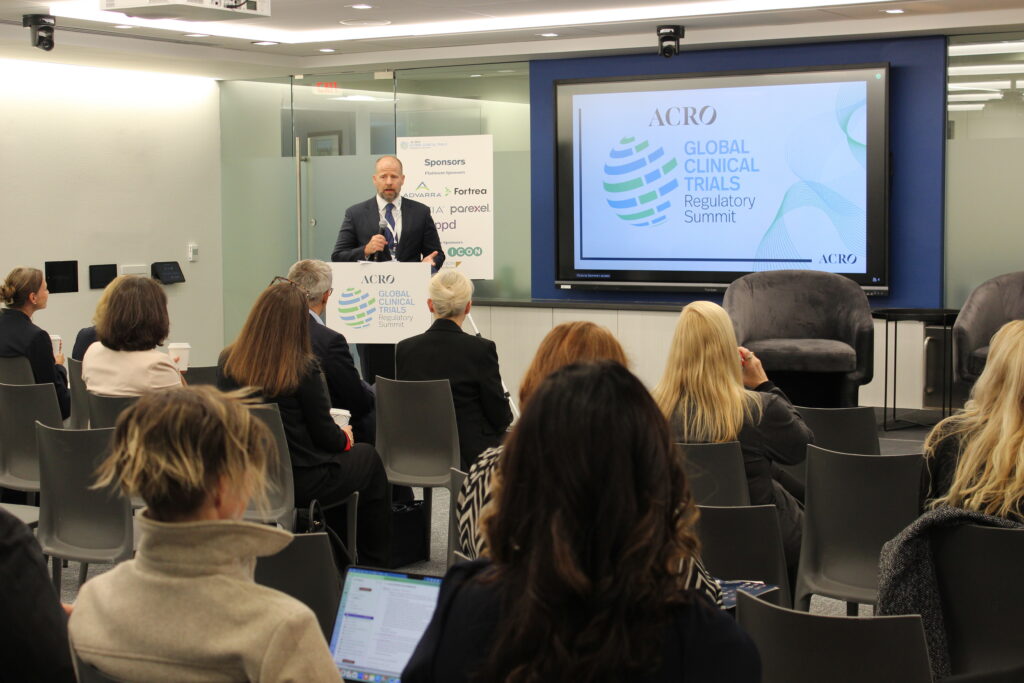
In late September, thought leaders across the clinical research industry came together for ACRO’s inaugural Global Clinical Trials Regulatory Summit to discuss these issues, share perspectives, and identify practical ways to strengthen and sustain the clinical trial ecosystem.
Following opening remarks offered by ACRO Board Chair Sandy Kennedy of Fortrea, Robert M. Califf, MD, MACC, former FDA Commissioner and Instructor of Medicine at Duke University, opened the conference in a conversation with Julie Tierney, Partner at Leavitt Partners, and Susan Winckler, CEO of the Reagan-Udall Foundation for the Food and Drug Administration, on the evolving global regulatory frameworks, the impact of cultural norms on clinical trials, and the future of data integration.
Dr. Califf began by expressing optimism around the tremendous collaboration and goodwill among the regulators, but also pointing out that perhaps “the bigger issue is how the regulators will be allowed to sort of break out and really collaborate, given the constraints and the sort of nationalistic or regional tensions which are now very much in play.” Panelists added that the real risk in this space is that conversation around what can be done will continue without any action attached.
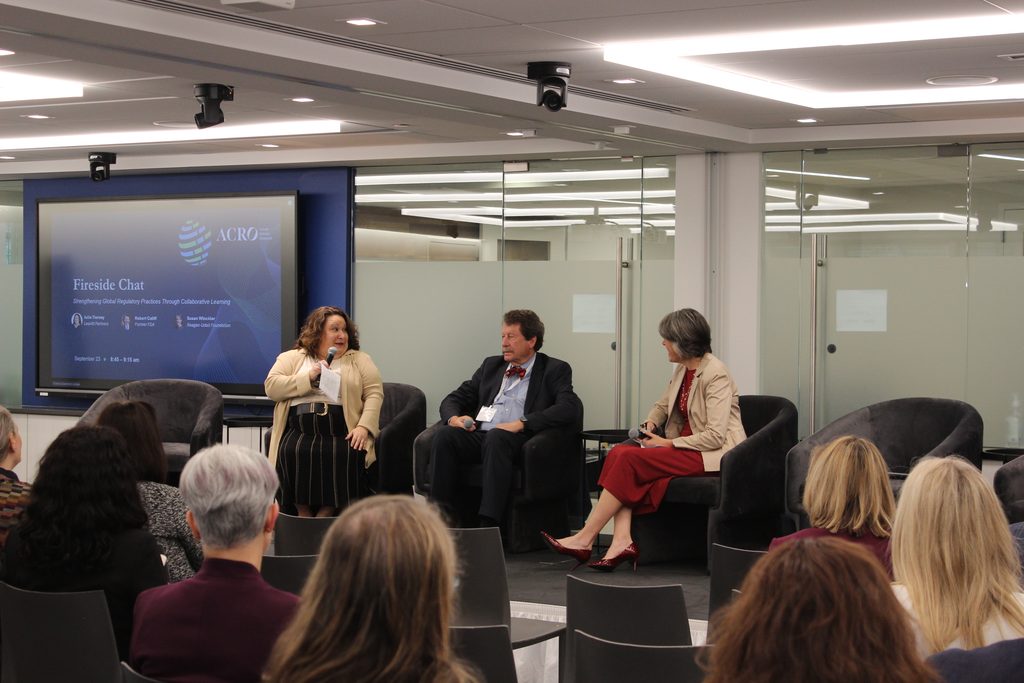
A theme that presented itself across the day’s discussions was the importance of trust. Trust in data. Trust in regulators. Trust across nations. Califf closed the discussion with the first mention of trust, pointing out that anyone working in evidence generation “should be very concerned about how that knowledge is translated into things that people can understand” and trust.
Session 1: Learnings from Clinical Trial Innovations around the Globe
The first official session of the day focused on the evolving medical product development regulatory paradigm, recent clinical trial innovations, and observed sector growth.
Panelists shared insights about the unique regulatory landscape of the countries in which they operate, highlighting the key strengths, challenges, and proposed reforms.
The panel addressed several critical blockers to innovation adoption:
- Cultural Risk Aversion: Panelists pointed out that despite the existence of ICH E19 for selective safety data collection, uptake remains slow because sponsors fear deviating from established protocols.
- Population Representation: Participants discussed the need for diverse genetic backgrounds, such as India’s four distinct groups, and the challenge of ensuring European populations are adequately represented in global trials.
- Implementation Gaps: Panelists explored how regulators can provide more granular guidance on AI and move beyond macro-level principles.
- Case Studies: Panelists called for greater utilization of hypothetical tabletop exercises or sandbox environments, like those used by the FDA, EMA, and MHRA, to assist in the development of templates to build sponsor confidence.
Session 2: Adoption and Utilization of Artificial Intelligence Digital Tools
The second session of the day brought together industry leaders to explore the challenges and opportunities in regulatory and industry use of AI and digital tools in drug development and regulatory processes. Regulatory and industry experts joined together to puzzle through integration, governance, validation, evaluation, and standardization of AI in clinical development.
Touching first on regulatory guidance, panelists highlighted that a key priority is maintaining alignment across regulators to prevent divergence in global AI development programs.
Moving to implementation, panelists discussed the need for AI to move beyond individual workflow optimizations toward becoming an integrated “operating system” for clinical trials. Panelists identified several barriers to transformation, including resistance from legal/quality teams, data silos preventing agentic solutions, and a shortage of multidisciplinary fluency. Paths forward discussed included:
- Balancing compliance with speed.
- Moving from high-level principles to actionable patterns through shared case studies.
- “You can’t have your AI ice cream until you have had your data veggies:” Addressing data readiness by ensuring that robust data governance (“data veggies”) must precede advanced AI applications (“AI ice cream”).
In closing, the panel emphasized the continued need for pre-competitive collaboration through organizations like ACRO.
Session 3: International Regulatory Harmonization During a Time of Rapid Transformation
The third session of the day focused on international regulatory harmonization, discussing the critical need to advance global regulatory harmonization to overcome geopolitical barriers, data fragmentation, and implementation gaps in clinical research.
Touching first on the global challenges faced by the industry, panelists highlighted that global collaboration is being strained due to nationalist interests, with a growing concern that these interests may block the flow of data across borders. With that in mind, panelists asked: How should we think about global harmonization? They argued that while updated guidance like ICH E6(R3) serves as a milestone for Good Clinical Practice (GCP), there is often a disconnect between policy and inspectional reality. Panelists identified legitimate jurisdictional differences and outdated practices as persistent challenges to greater harmonization.
The panel closed out their discussion by proposing several strategic shifts to improve the ecosystem:
- Establishing robust, real-time inspection finding sharing systems among trusted partners.
- Moving from convergence on principles to convergence on shared judgment through better training and use cases.
- Increasing mutual reliance rather than just data sharing under confidentiality agreements.
- Creating stronger feedback loops where implementation challenges in the field inform future ICH or ICMRA updates.
Session 4: The Future Vision for Patient-Centered Drug Development
Session four was a deep dive on the current state of patient-focused drug development and opportunities for advancing patient-centered approaches throughout the drug development process. Panelists explored the importance of integrating patient experiences and data into the entire drug development lifecycle to ensure clinical outcomes align with patient needs.
Looking to the future, panelists emphasized the role of technology as a critical driver for future progress, including:
- Using AI to identify disease trajectories and characterize endpoints more effectively.
- Leveraging Real-World Evidence (RWE) and external data sources to bolster submission-grade evidence.
One quote nicely sums up the need to loop patients into the process early on: “If you wait until the end of the trial to ask what information would have been important to a patient or what’s meaningful to them, you largely kind of miss the point and the opportunity of patient-centered drug development.”
Session 5: Closing Discussion
The fifth and final session reflected on the earlier sessions and laid out next steps for advancing clinical trial innovation.
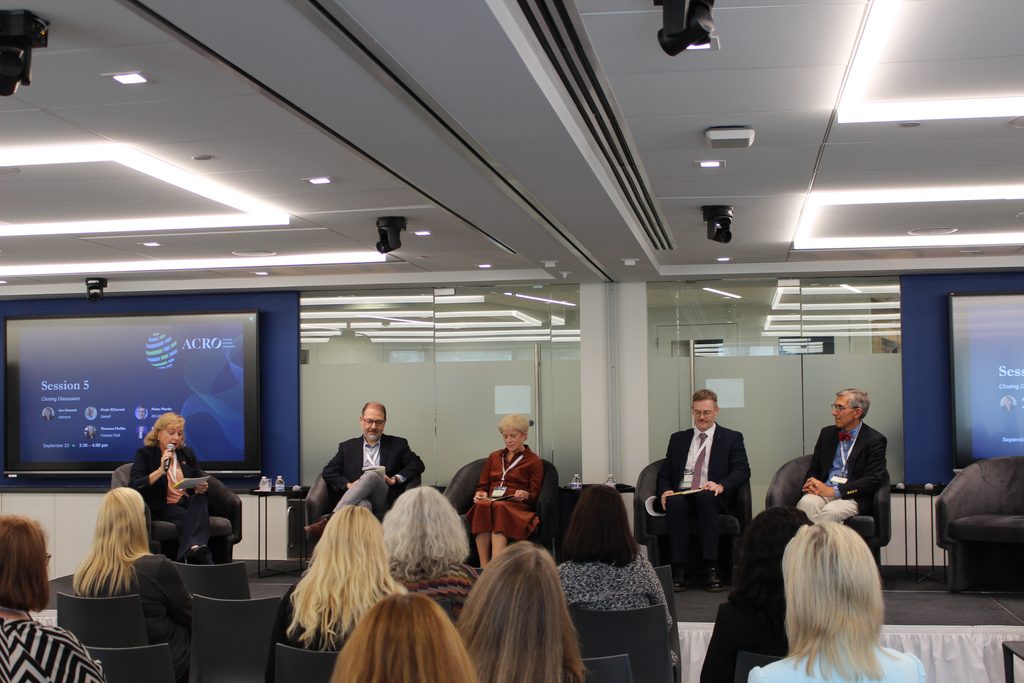
Speakers shared key takeaways across several categories:
- On global regulatory alignment and harmonization, panelists emphasized that while national processes remain necessary to accommodate local healthcare systems, data assessment should be harmonized to prevent duplication of effort. Panelists agree that regulators and standards organizations need to find a way to keep pace with scientific advances.
- On driving innovation, the panel discussed the urgent need to define how good clinical practice applies to AI and how to implement risk-based approaches in clinical trials in a way that maintains confidence in results. Relatedly, panelists emphasized the importance of incorporating patient voices into trials and product labels.
- One of the most significant implementation gaps identified by the panelists: Trust. Panelists noted that trust must be designed into the process rather than just declared.
In closing out the discussion, panelists agreed that not only is there a need for closer communication between sponsors and regulators, similar to the high-frequency engagement seen during the COVID-19 pandemic, but patients need to be included in early stages as well.
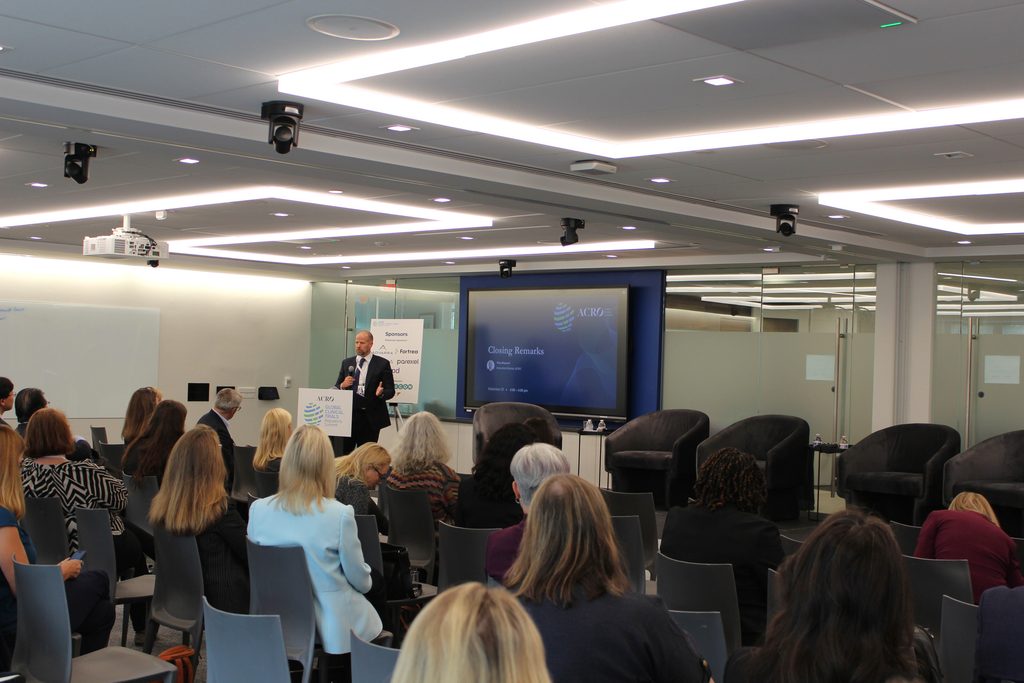
ACRO Executive Director, Clay Alspach, shared closing remarks, leaving attendees with tremendous gratitude, thanking sponsors for their support and attendees and speakers for their engagement: “Thank you so much for taking the time to enable this discussion, this robust exchange. It’s necessary. We’re talking about this inflection point. Change is inevitable, but we can have a productive, positive outcome here.”
A special thank you to our Platinum Sponsors—Advarra, Fortrea, IQVIA, Parexel, and PPD—for their outstanding support, partnership, and engagement. We also extend our sincere appreciation to our Bronze Sponsors—Florence, ICON, and Precision for Medicine—for their valued support. We are proud to have these organizations as partners in advancing the future of clinical research.