

DIA 2026, held June 14-18, 2026, brought thousands of professionals from the clinical research industry, regulatory agencies, and patient advocacy to tackle the issues and challenges shaping healthcare and furthering innovation today. The 4-day conference featured an exchange of diverse perspectives, cutting-edge scientific insights, and regulatory expertise across the therapeutic lifecycle, exploring topics like artificial intelligence, global regulatory alignment, patient-centered design, and beyond.
Sessions throughout the week provided the opportunity for diverse perspectives to be showcased to foster collaboration and drive innovation. Misalignment of perspective or perception, rather, was the focus of a panel discussion moderated by ACRO’s Director of Industry Intelligence and Messaging, Erin Brown, focused on destigmatizing FDA’s 483 observations. Though intended to notify inspected entities of potentially objectionable conditions of a clinical trial site, manufacturing facility, or other regulated entity, there is widespread industry anxiety that these observations will impact the acceptability of a marketing application, ultimately impacting their willingness to employ more effective, efficient risk-based quality management (RBQM) trial strategies.
ACRO RBQM Committee members Nicole Stansbury, Senior Vice President, Global Clinical Operations at Premier Research, and Cris McDavid, Senior Director, GCDO at Parexel, brought the CRO perspective to bear in discussion with David Burrow, Director, Office of Scientific Investigations, OC, CDER at FDA, and Tracy Vanderslice, Vice President, Clinical Operations at Gilead Sciences (TransCelerate), to unpack perceptions around the criticality of issues identified in 483 observations, as well as the impact of these perceptions on the deployment of more expansive risk-based quality management strategies.
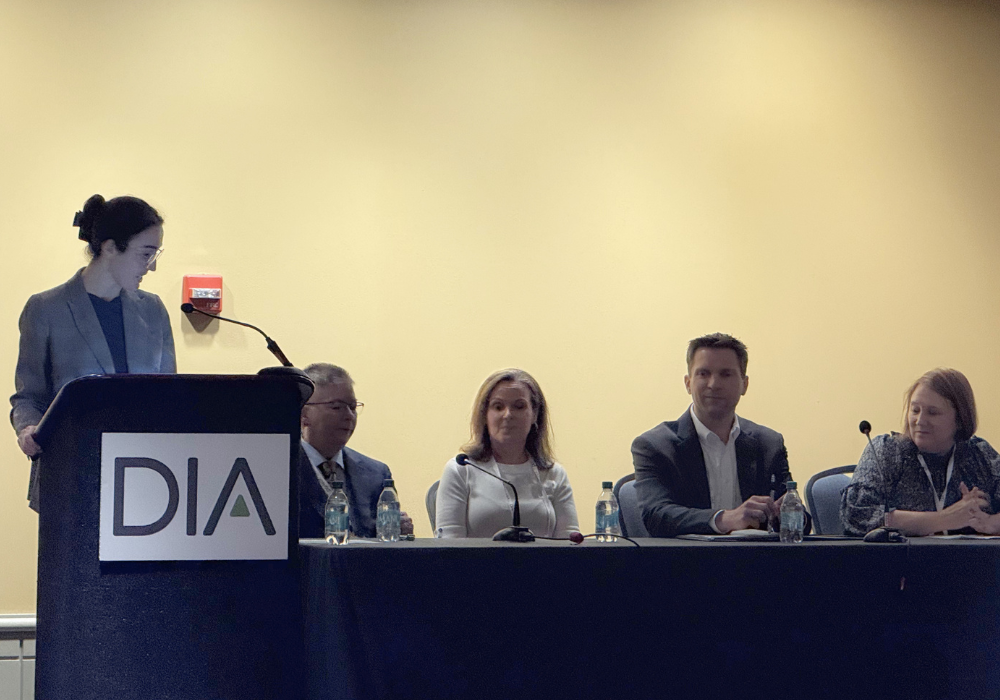
The discussion began by setting the record straight: A 483 observation is just that — an observation. It is not a regulatory decision, and the significance of a 483 is dependent on the scope and nature of the observations that are cited. In fact, these observations serve as one of the most effective communication tools that inspected entities have with the FDA. Along those lines, the panelists emphasized the need for a measured response to 483s, advocating for a shift from punitive to diagnostic tools. They stressed the importance of QbD, clear protocols, and effective monitoring strategies to mitigate 483s. The discussion also touched on the role of AI in improving monitoring, and the need for better training and resource allocation to enhance data quality and patient safety.
They closed the session by stressing the importance of utilizing risk-based approaches for both industry and the FDA. Industry can prioritize incorporation of quality by design and design-led prevention efforts to reduce the number of 483s. The FDA is trying to employ a more risk-based strategy in their oversight tools to ensure that conditions noted in 483 observations are important. The FDA is currently engaging in activities to try to ensure alignment in the identification and the use of critical quality factors, specifically the use of directed inspections.
“Quality in clinical research is the absence of errors that matter. It’s not the absence of all error, because perfection is effectively unattainable.”
ACRO members were well represented on the DIA stage, participating in panels and presentations on topics ranging from AI in clinical development, to eCOA localization, to patient safety. ACRO is always looking for opportunities to engage with our members and make connections with industry luminaries to continue to foster collaborations and partnerships that will encourage industry growth and stability.