

Written by:
Rose Blackburne, MD, MBA, Vice President and Head of Population Science Strategy and Women’s Health, PPD
Paula Underhill, Senior Director and Head of Strategic Site Collaborations, PPD
Meghan Cox, MPH, Associate Director, Population Science Strategy, PPD
National Health Center Week provides an opportunity to recognize the far-reaching impact of community health centers in improving health outcomes. For millions of people, these centers are the first place they turn when they are sick, need access to preventive care, or seek support for a loved one.
That same community trust and continuity of care uniquely positions community health centers to expand access to clinical trials for historically underserved populations without disrupting routine care. Clinical research is a true extension of their existing mission. Many health centers have already demonstrated what is possible in clinical research; the challenge now is building the capacity that allows community-based research to reach its potential.
As more care moves into community-based delivery, clinical research has an opportunity to evolve alongside it. Rather than asking healthcare providers to adapt to traditional research models, the future lies in designing research that complements and strengthens the care patients already receive.
Community Health Centers as Research Partners
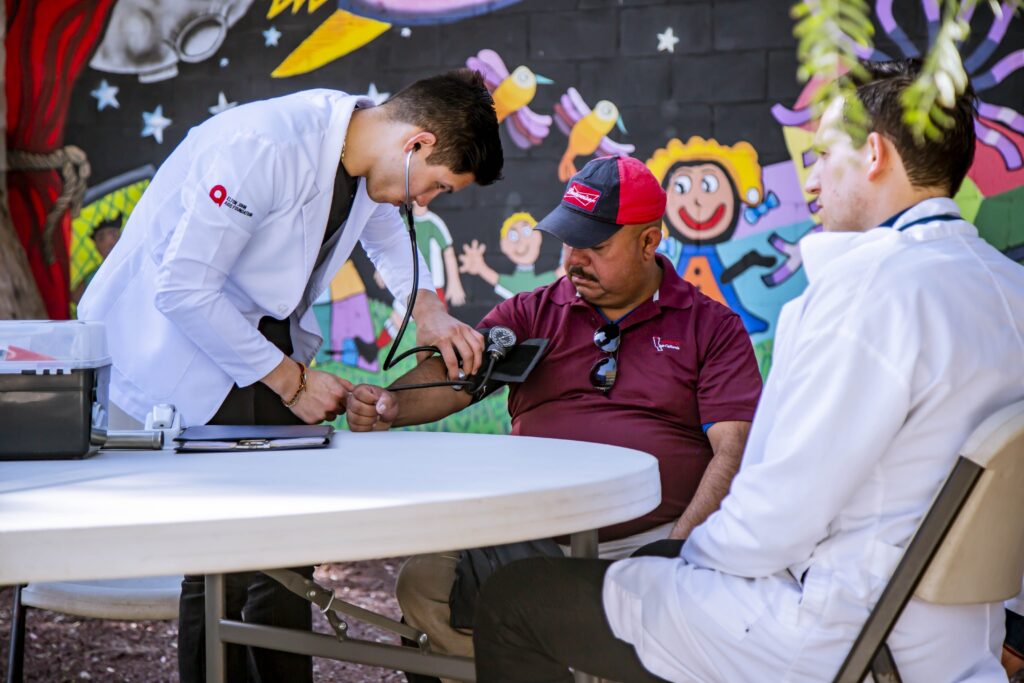
In the U.S., community health centers deliver primary care to nearly 1 in 7 Americans, including many patients and health care professionals who are often missed by traditional research infrastructure, such as rural communities and medically underserved populations. Globally, primary care can also serve as an entry point into the healthcare system, making it a natural setting to introduce research.
By meeting patients where they are in a trusted setting, community-based delivery models can also help overcome many of the social, cultural, and psychological barriers to clinical trial participation.
For a caregiver in a rural community, it might mean avoiding a long drive to the nearest research hospital and taking time off work to get a family member to clinical trial appointments. For a first-generation immigrant, that might mean talking through a study with a provider who does the consent process in their native language and understands the nuances of their questions or concerns. Research becomes more accessible and relevant to patients’ everyday lives.
Beyond improving access, community-based research also strengthens science itself. Often referred to as frontier or emerging sites, these research settings can broaden demographic inclusion and generate evidence that better reflects the patients who will ultimately use new therapies. When trials include patients in the settings where disease prevention and chronic treatment is managed, they are more likely to generate evidence that reflects real-world care journeys, comorbidities, treatment patterns and other factors.
Community health centers also offer what many traditional research environments cannot: longitudinal relationships with patients across prevention, diagnosis, treatment and ongoing disease management. Embedding research within these existing care pathways enables earlier patient identification, supports a better understanding of disease progression, and generates evidence that more closely reflects routine clinical practice.
This is particularly important as pharmaceutical, biotech, and medical device sponsors increasingly seek to study chronic diseases earlier in their course, understand real-world treatment patterns and recruit more representative patient populations.
Expanding community health centers’ role in clinical research also means making participation realistic in primary care workflows. Protocols, visit schedules, and operational expectations are often built around specialist research centers rather than busy community practices managing high patient volumes, limited resources and competing priorities. Consistent with the primary care physician perspective, clinical trial participation works best when studies fit into everyday practice, with lesser documentation burden and disruption to routine workflows.
Ultimately, research is most sustainable when it becomes part of the continuum of care rather than an additional responsibility that competes with patient care.
Building Sustainable Community Research Partnerships
Clinical research and routine care work together, but long-term sustainability depends on investments and partnerships across the drug development ecosystem. In practice, this means adapting workflows and helping community health centers build the operational capabilities needed to support trials alongside routine care, rather than expecting them to bear the cost of clinical trial staff resources and infrastructure. According to a recent survey of frontier clinical trial sites and clinical research industry stakeholders, expanding research into new communities depends on providing robust operational support rather than simply opening more research sites. Respondents consistently identified infrastructure, quality oversight, training, and implementation guidance as enablers for sustainable participation of frontier sites in the clinical research ecosystem.
Clinical trial sponsors and their contract research organization (CRO) partners have an important role to play in optimizing the conditions that allow community-based research to succeed and thrive. From our experience, this means:
Investing in readiness
Community health centers bring a deep understanding of the communities they serve, established patient relationships and extensive clinical expertise, but becoming sustainable research sites requires training and ongoing support. Many primary care providers have limited exposure to clinical research operations, making foundational education essential.
Through the SiteCoach program from PPD™, the clinical research business of Thermo Fisher Scientific, we have trained community clinics and practices to become community-based sites through live instruction that provides hands-on clinical research training, coaching and support designed to build research readiness. Training spans the fundamentals like effective clinical trial management, through more advanced topics, including the infrastructure and operational requirements needed to support complex studies, such as gene and cell therapy trials.
Research readiness requires more than training. Sustainable participation depends on developing the operational infrastructure, governance, quality systems, workforce capability, and ongoing support that enable research to become a natural extension of everyday clinical practice.
By investing in research readiness before clinical trial programs begin, sponsors and CROs can help community sites move from interest into action.
Advocating for Inclusion
Ensuring clinical research can reach all communities requires expanding the view of what a qualified research site can look like. Many community-based sites are often not included or considered early in the site selection process, which can limit clinical trial opportunities.
As clinical research professionals, we have a responsibility to challenge our teams to look beyond traditional academic centers and research sites that have historically been selected for trials. This means we should:
- Advocate for qualified frontier sites to be included in feasibility and site selection processes, recognizing their long-term value from both scientific and clinical perspectives.
- Intentionally consider where patients naturally receive care, recognizing that healthcare delivery systems themselves can become strategic research partners when provided with the appropriate support.
Committing to the Long Term
Building community-level research capacity requires more than bringing on a frontier site for a single study, it requires ongoing collaboration and mutual learning. With each study, community sites build more robust expertise and infrastructure, allowing research to become a true extension of the care they provide.
Long-term collaboration also means designing operations with primary care workflows in mind, taking feedback from community practices, and streamlining practices where possible, so research fits more naturally into everyday care.
Equally important is establishing structured partnerships that provide governance, operational support, shared learning, and continuous engagement across multiple studies. This allows research capability to mature over time rather than restarting with each new protocol, creating sustainable research ecosystems.
In turn, sponsors and CROs gain valuable real-world insights that can inform and strengthen their clinical development programs.
Conclusion
Community health centers are already doing the work: delivering compassionate care, reaching patients often missed by the healthcare system, and demonstrating what is possible when innovative trials are brought closer to their patients.
As a drug development industry, we need to match that effort through continued investment and partnership to make clinical research part of everyday care so that medicine can work for everyone.
The future of clinical research will not be defined solely by new medicines, technologies, or trial designs. It will also be defined by where research happens and who can participate. Community health centers have already shown that research can be integrated into everyday care. With sustained partnership, thoughtful investment and operational support, they can become an integral part of the clinical research ecosystem, bringing research closer to everyday healthcare and helping ensure innovation reaches the patients who need it most.
References
- National Association of Community Health Centers. America’s Health Centers: By the Numbers. National Association of Community Health Centers. Accessed July 13, 2026. https://www.nachc.org/resource/americas-health-centers-by-the-numbers/
- Croke K, Moshabela M, Kapoor N et al. Primary health care in practice: usual source of care and health system performance across 14 countries. The Lancet Global Health, 2023; 12, e134-e144
- Wangler, J., Jansky, M. Primary care involvement in clinical research – prerequisites, motivators, and barriers: results from a study series. Arch Public Health 82, 41 (2024). https://doi.org/10.1186/s13690-024-01272-x
- Unertl KM, Fair AM, Favours JS, Dolor RJ, Smoot D, Wilkins CH. Clinicians’ perspectives on and interest in participating in a clinical data research network across the Southeastern United States. BMC Health Serv Res. 2018;18(1):568. Published 2018 Jul 20. doi:10.1186/s12913-018-3399-9 5.
- Bastek A, Zenere A, Manley H, Finkle C, Jaeger C, Matthews J, Moffett K, Solomon M, Underhill P. Frontier sites in clinical trials: Opportunities, challenges, and models. Contemp Clin Trials Commun. 2025 Nov 25;48:101581. doi: 10.1016/j.conctc.2025.101581.