

ACRO staff and several ACRO member companies attended the FDA & Duke Margolis Public Workshop: Scaling Innovative Clinical Trial Approaches: Challenges, Progress, and Opportunities. The workshop, held earlier this week, brought together regulators, industry leaders, and clinical research stakeholders to discuss the evolving landscape of clinical trial innovation, with a strong focus on collaboration, patient-centricity, and operational scalability.
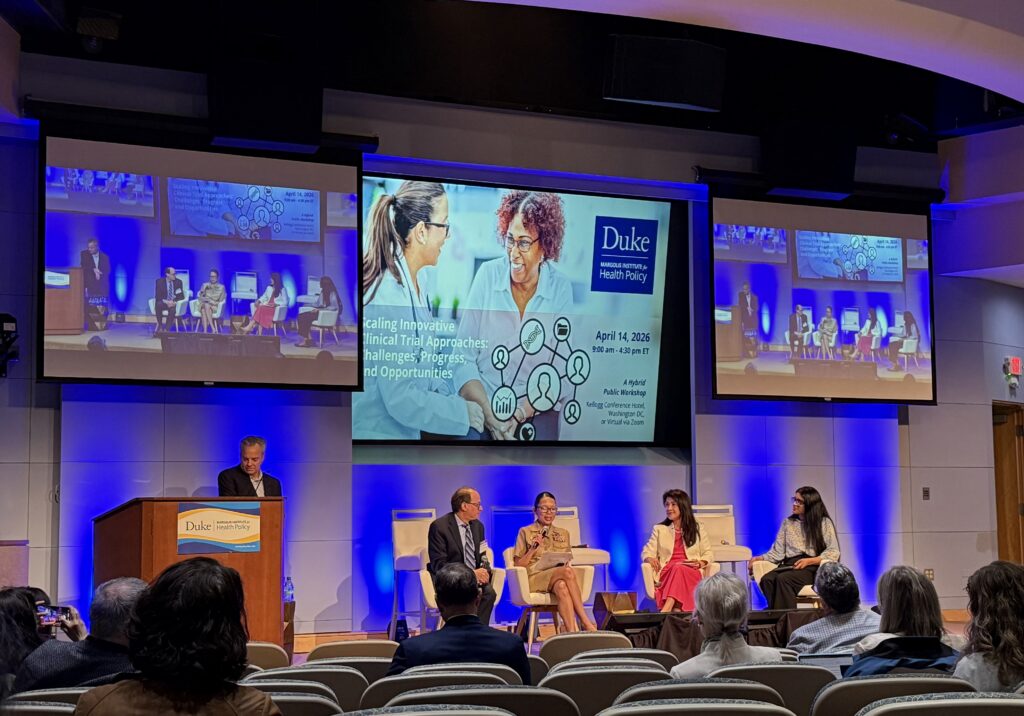
C3TI & Regulatory Landscape
Two years after launch, the FDA’s C3TI continues to promote innovation through cross-functional collaboration and open dialogue with industry. Meghana Chalasani, Associate Director for the FDA’s Clinical Trial Innovation in the Office of New Drugs (OND), provided an overview of C3TI, its mission to improve efficiency in drug development, and its portfolio of programs to promote clinical trial innovation.
In a subsequent discussion, speakers from FDA, TransCelerate BioPharma Inc., and Vanderbilt University emphasized the importance of early and often engagement with regulators, the importance of global alignment across regulators, and the growing role of real-world evidence (RWE). As technologies evolve rapidly, ongoing communication between sponsors, CROs, and regulators is critical.
Session 1: Innovation in Practice
The first session of the workshop featured speakers from FDA, Novartis, and Boehringer Ingelheim in a discussion on the real and perceived barriers that may discourage adoption of innovative clinical trial approaches. Improving patient recruitment and retention remains a priority. Panelists highlighted the value of incorporating patient input early in trial design and leveraging approaches like adaptive trial designs to increase efficiency, especially in rare diseases, when trial populations are limited, the stakes are high, and there is no room for error.
The FDA also noted a sharp rise in AI-driven submissions, with applications spanning endpoint assessment, risk stratification, and drug development, signaling AI’s expanding role across the clinical lifecycle.
Session 2: Barriers to Implementation
The second session of the day brought together regulators (FDA), sponsors (Amgen and Pfizer), and CROs (Premier Research) to explore the current constraints to operationalizing innovation in trials. Key challenges include:
- Global regulatory misalignment
- Operational complexity at trial sites
- Unclear expectations for novel approaches
- Risk aversion and fear of regulatory consequences
Speakers stressed that innovation and quality are not mutually exclusive. Greater alignment, predictability, and early regulatory feedback are essential to scaling new approaches.
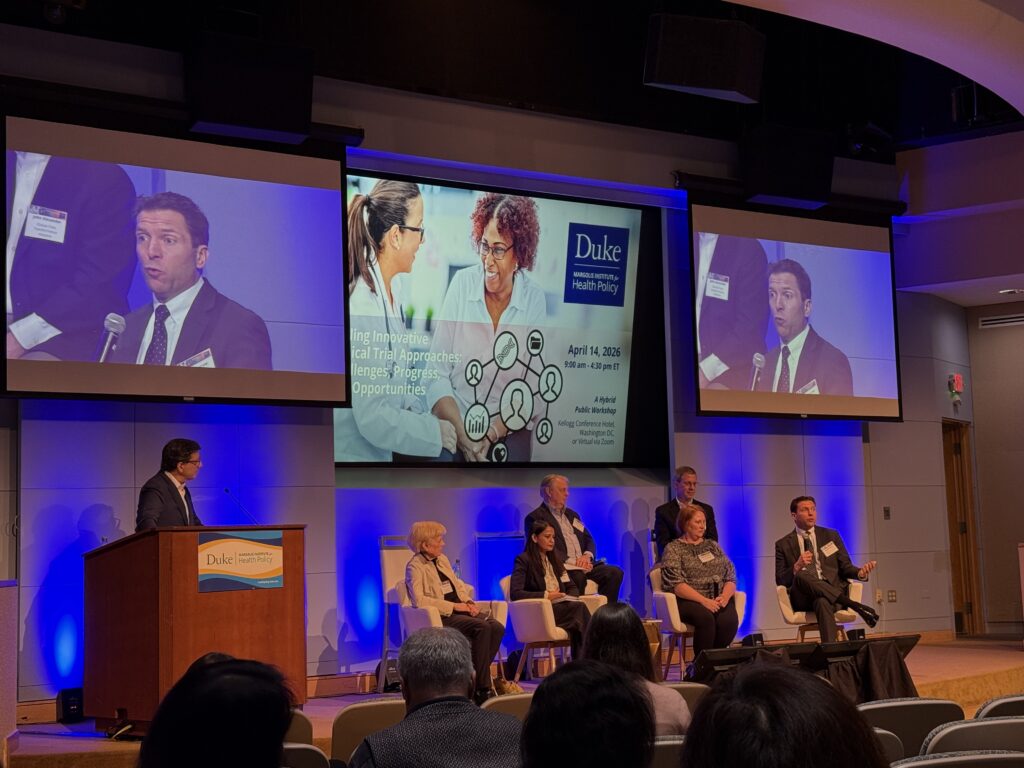
Session 3: Driving Culture Change
The third session of the day focused on scaling culture change for innovation. Speakers from FDA, Eli Lilly and Company, Care Access, and Paradigm Health explained that sustainable innovation requires embedding it into organizational culture. Lessons from COVID-19 showed what’s possible when stakeholders align around a shared problem. Success depends on data-driven proof, persistence, and leadership support, with innovation reframed as ongoing modernization rather than a separate initiative.
Session 4: Next Steps & Priorities for Clinical Trial Innovation
The fourth and final session reflected on the earlier sessions and laid out immediate next steps for advancing clinical trial innovation. Speakers from FDA, Sanofi, Parexel, and AstraZeneca shared these key takeaways:
- Engage regulators early and often.
- Design trials around patient needs and real-world settings.
- Move beyond risk aversion to scale innovation.
- Invest in workforce, infrastructure, and global alignment.
Michael Davis, Deputy Center Director of the FDA’s Center for Drug Evaluation and Research (CDER), shared closing remarks, leaving attendees with this bottom line: Advancing clinical trial innovation will require continued collaboration, cultural change, and a shared commitment to delivering faster, more accessible therapies for patients.